
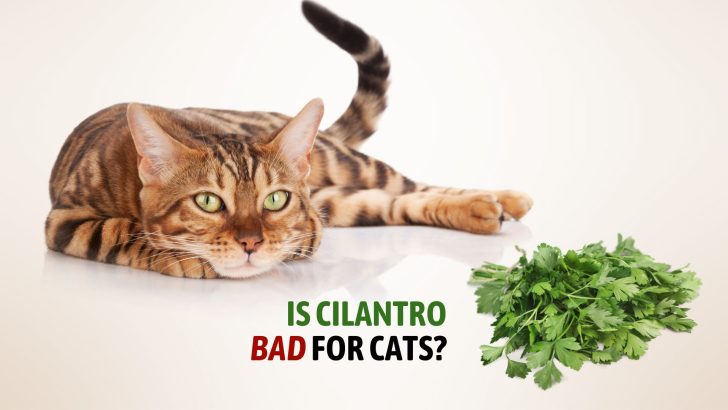
Cilantro is a spicy herb that many people use even in their daily diet. It is a good source of vitamins A, C, and K, and also has an important antioxidant effect.
Cilantro is very useful for people because it cleanses the body of toxins, improves appetite, and normalizes digestion. Very often you can see this plant growing along the edges of the garden, along the roads, and in the vineyards.
Although the effects of cilantro are very positive for humans, anyone who has a pet will wonder if this plant is safe for them as well. After all, a cat’s diet should be based on animal protein, while many plants are even dangerous for them to consume.
Is cilantro bad for cats? Or should you not worry if your cat consumes this plant?
Let’s find out the answers.
Is Cilantro Safe For Cats?

According to the American Society for the Prevention of Cruelty to Animals’s list of non-toxic and toxic plants for cats, cilantro is classified as a safe plant.
You should be aware of all the potential threats of any plants you have at home with a feline friend around.
For instance, lemon trees are toxic to cats and you shouldn’t leave your kitty unsupervised having this plant inside your home or garden.
Luckily, cilantro isn’t bad for cats, so, if you happen to see your cat nibbling on it, you shouldn’t worry.
If it sees it for the first time, your cat is probably just curious about it and will want to lick and sniff it.
In any case, there’s no need for any intervention or figuring out ways to keep the cilantro out of your cat’s sight.
Can Cilantro Cause Any Distress In A Cat?
Although cilantro is generally safe for cats, it can still lead to certain reactions, particularly in those with sensitive stomachs.
Cats who are prone to gastrointestinal issues may experience symptoms like vomiting and diarrhea, especially if they consume too much cilantro in one sitting.
My advice is to give your cat a few leaves first, just to have it try, and watch its reaction. If some time passes, and your cat seems to be perfectly fine, you can give it some more – if it seems up for it.
Do Cats Like Cilantro?
There isn’t a single answer to this question.
A liking or aversion to any food ultimately comes down to the individual preference of each cat. For example, most cats really enjoy fish, but there are some who will simply not like salmon or tuna so much.
The same thing is true with cilantro. Take a look at the video below to see a cat that seems to really like the cilantro taste!
On the other hand, your cat can try it out of curiosity and figure out it isn’t so tasty.
If a cat shows no interest in this plant, of course, you shouldn’t force it to eat it. If it enjoys it, you can keep it as an occasional treat, of course, after checking whether it causes any kind of gastrointestinal upset in your pet.
Do Cats Need Cilantro In Their Diet?

Cats don’t actually need cilantro in their diet. While we can benefit by adding this herb to our nutrition, felines don’t need to eat this plant.
Since they’re obligate carnivores, all they need is meat protein to stay happy and healthy.
Even if your cat really likes cilantro, this plant shouldn’t make any substitute for animal protein which should be the main ingredient in your cat’s diet.
While you can offer cilantro as an occasional treat for your cat, make sure it doesn’t enjoy it too often, neglecting its standard cat food that’s necessary for its health.
As WebMD suggests, the golden rule with pet treats is limiting them to 10% of their daily calories.
Since plants aren’t a normal everyday food for cats, they can’t digest them in the same way they do with animal protein. Therefore, too much cilantro in your cat’s diet can lead to very smelly feces.
What are the Health Benefits of Cilantro for Cats?
Image Credit: Unsplash
Since cilantro is one of the many herbs that are “cat-safe,” you might be curious about its benefits. How does it help your furry feline friend?
- Cilantro has a significant water content (around 92%), which is fantastic for your cat’s hydration. If your cat tends to shy away from drinking water, coriander can be a great addition.
- Cilantro is loaded with antioxidants, which can help optimize free radical damage in your cats, keeping them healthy.
- Cilantro is loaded with numerous micronutrients like vitamin A, vitamin K, and potassium, which are excellent for your cat.
That said, every cat is different, and so are their dietary needs. If your cat doesn’t take to cilantro, there’s nothing wrong with it. Avoid forcing it on them, since that can have adverse effects.
How Much Cilantro is Okay for Cats to Consume Daily?
There’s a saying that “too many cooks spoil the broth.” This also applies to what you feed your cat. Just because coriander is suitable for your cat doesn’t mean it should be a “major” part of their daily diet.
So, how much is too much?

Image Credit: Unsplash
You can always start by gradually introducing one or two leaves of cilantro to your cat and see how they respond. If they like eating it, you can then add a few leaves to their daily meals. Again, it shouldn’t cross more than 10% of their daily diet.
Note: If your cat experiences side effects like diarrhea, nausea, or vomiting after eating cilantro, stop giving it to them immediately. This typically means that your cat isn’t able to digest the cilantro leaves, or it is not sitting well with their daily diet.
Final Words
Is cilantro bad for cats?
Fourntatley, no. While many plants we find in people’s homes and gardens are toxic to cats and can even be life-threatening, cilantro is on the safe side.
So, while preparing your lunch and using cilantro to season it, don’t lose your mind if your cat happens to sniff around and nibble on this plant.
The risk of cilantro causing any problems in your kitty isn’t too high. Of course, if your cat has a sensitive stomach, it could experience some nausea and vomiting. In this case, you should be careful and don’t let it wander freely around anything that can upset its stomach.
Some cats will like cilantro and could even ask to get plenty of it. While it isn’t dangerous for them, remember that a cat’s digestive system is designed to break protein.
Therefore, felines don’t need plants as cilantro in their diet. If you, however, would like to not withhold your cat from it definitely, you can keep it as an occasional treat.
In the end, I would like to remind you to always discuss with your veterinarian about any kind of change in your cat’s diet, including their occasional treats.